Pharmaceutical aggregation
The future of traceability in the pharmaceutical industry.

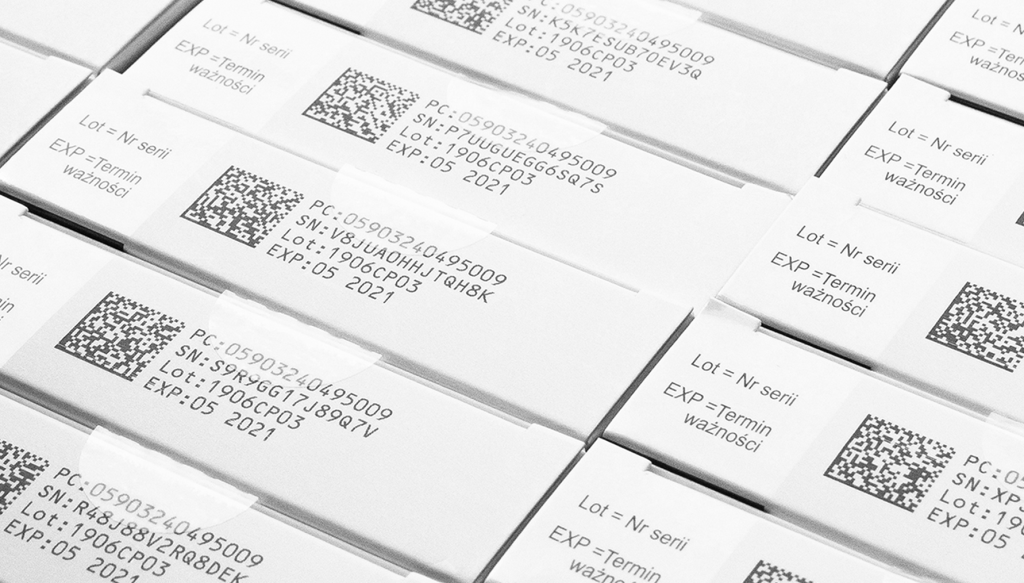
Pharmaceutical aggregation is the next logical step following the implementation of serialization. These are two closely interconnected processes.
Pharmaceutical aggregation – the next stage of serialization development
Pharmaceutical aggregation is the next logical step following the implementation of serialization. These are two closely interconnected processes. By definition, aggregation links unique serialized unit packages of prescription drugs with a higher level of secondary packaging, and subsequently with the pallet level, assigning them a unique serial number. Products with serial numbers are placed during the aggregation process into a larger collective package – kits, cartons, or pallets.
Hierarchy of serial numbers in collective packaging
In collective packaging, each package has its own unique serial number, but the entire bundle and pallet also feature labels containing unique serial numbers. In summary, aggregation is the process of creating a hierarchical relationship between unique identifiers assigned to collective packaging.

Why do companies implement aggregation?
Many companies that have completed the implementation of product serialization anticipate aggregation as the next stage of development. This solution opens up new possibilities in tracking medications throughout the supply chain. Through the use of aggregation, pharmaceutical companies achieve significant savings and modernize production processes. Currently, an increasing number of enterprises view aggregation as a vital competitive advantage and an important element of operational efficiency improvement.
Key benefits of aggregation
Among the most important benefits stemming from the implementation of aggregation are:
Aggregation allows for significant time savings. It eliminates the need to open every batch or collective package to scan an individual product. All data is readily available across the entire supply chain, enabling effective product tracking at every stage of distribution. This positively impacts the efficiency of logistics processes while increasing the safety and reliability of the entire medicinal product distribution system.
Is aggregation mandatory?
The aggregation process is not currently mandatory. At present, no legal regulations—neither in Europe nor in America—mandate the use of aggregation data. However, it is a recommended solution due to its numerous benefits and the fact that it strengthens supply chain integrity. It is also anticipated that an increasing number of countries will implement aggregation in the future as part of national regulations concerning medicinal product trade.
Challenges associated with implementing aggregation
The introduction of new solutions also involves numerous challenges. Issues related to implementing appropriate software and new equipment are particularly critical. Differences in packaging methodology and the necessity of developing new procedures for handling non-standard situations are also of great importance. Manufacturers must prepare their processes to handle new technological and logistics requirements.
Development of aggregation services at Prespack
Only a few companies operate on the Polish market offering professional solutions that meet the demands of the pharmaceutical industry. We are pleased that Prespack is also implementing solutions enabling serialisation data aggregation. Thanks to this, we will be able to offer clients a new service that will accelerate logistics processes and streamline the control of medicinal products across the entire distribution chain. We will share more information regarding the implemented solutions very soon.
Read also...
See more posts
Late-stage customization
Serialization and aggregation in the pharmaceutical industry