Serialization and aggregation in the pharmaceutical industry
Why is it worth outsourcing these services?
Requirements for the pharmaceutical industry are very rigorous and restrictive. This stems from the fact that the correct quality of medicinal products often determines the health and even the lives of patients. In recent years, requirements regarding safety and transparency in the pharmaceutical sector have increased significantly. The introduction of stringent regulations, such as the directive commonly known as the Falsified Medicines Directive (FMD), imposes an obligation on manufacturers to use increasingly advanced technological solutions for monitoring and tracking products. In this context, the processes of serialization and aggregation have become key, playing a fundamental role in protecting medicines against falsification and ensuring supply chain transparency.
On February 9, 2019, the period of application of obligations arising from Commission Delegated Regulation (EU) 2016/161 – the so-called Falsified Medicines Directive, namely Directive 2011/62/EU of June 8, 2011, on preventing the introduction of falsified medicinal products into the legal supply chain – began.
Serialization is the process of assigning a unique code to each unit of a product, which allows for accurate tracking of its path from production to the patient. Aggregation, in turn, enables the linking of multiple individual product units into larger groups, further streamlining supply chain management. Both processes are crucial for building trust in medicinal products, with serialization being mandatory on the European market.
Outsourcing serialization and aggregation services can not only ensure regulatory compliance but also reduce the costs of implementing and maintaining advanced systems. In the article below, we will take a close look at what the serialization and aggregation process involves and why outsourcing these services represents a cost-effective and efficient solution for pharmaceutical companies that must meet growing demands, optimize costs, and build a competitive advantage in the market in this way.
What is serialization?
Serialization involves assigning a unique serial number to each unit of a prescription medicinal product. Every such product contains information on its origin, batch number, and expiration date, enabling its precise tracking at every stage of the supply chain.
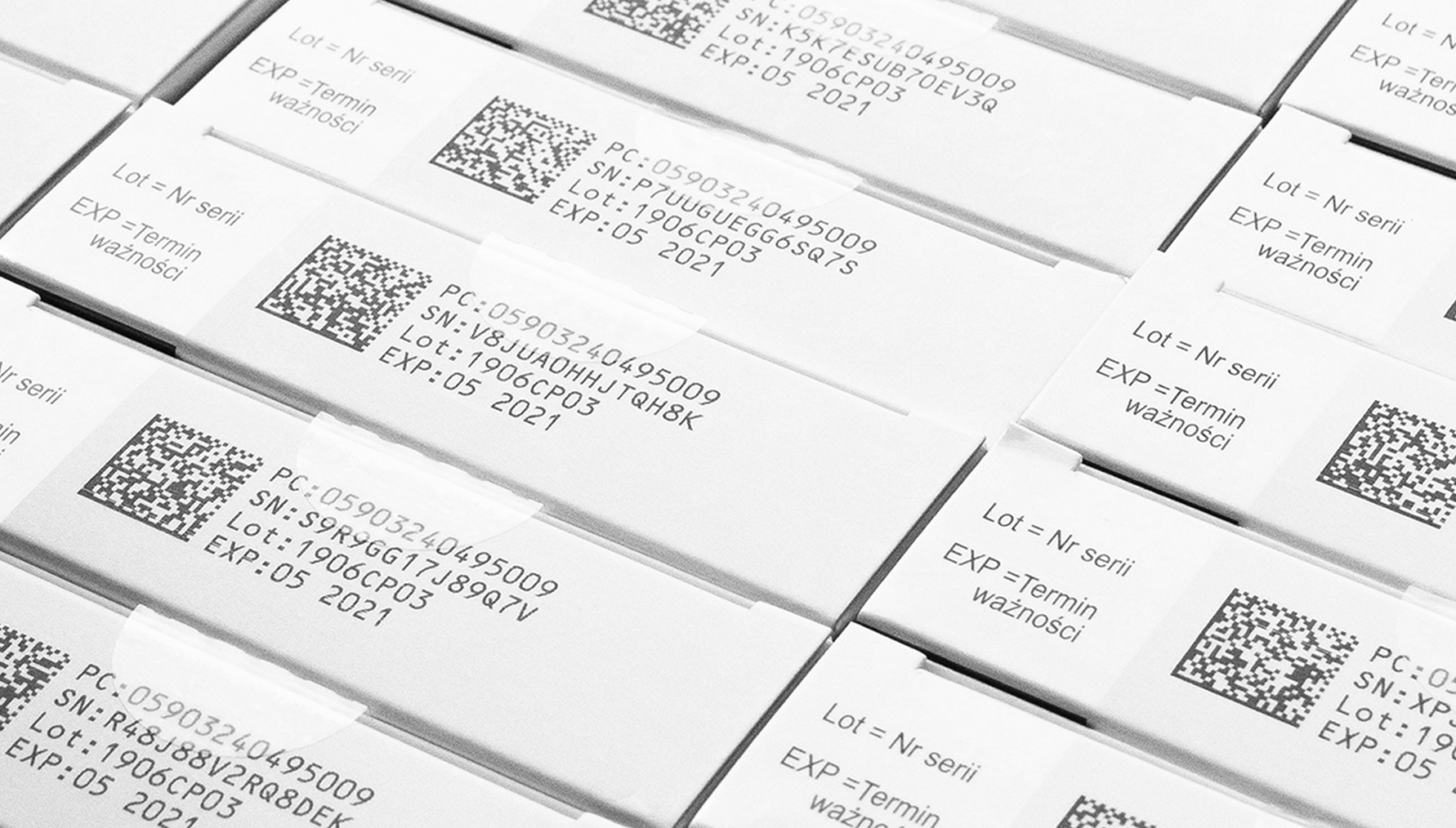
In addition to data, it is mandatory to print them in the form of a 2D code. The 2D Data Matrix code must contain the following elements: product code, batch number, expiration date, and a unique serial number generated using a computerized algorithm. This algorithm must not repeat for a minimum of 5 years from its introduction to the market.
In the pharmaceutical industry, serialization is of key importance in the fight against drug counterfeiting, which poses a serious threat to public health. Thanks to it, each unit of a product can be monitored in real time, allowing for a rapid response in the event of irregularities, such as suspected falsification or a quality issue.
The Falsified Medicines Directive (FMD) and the resulting obligation for drug serialization were enacted precisely to secure the European distribution chain against the introduction of falsified medicinal products into the markets of countries covered by the directive.
Counterfeit medicinal products can be drugs containing smaller amounts of active substances or none at all. They may also contain different active substances. Packaging can also be falsified. Consequently, the FMD introduced an obligation to place double safety features protecting against falsification on drug packaging. This obligation applies to prescription drugs and certain over-the-counter drugs.
Since February 9, 2019, drug manufacturers have been required to place two types of safety features on drug packaging, which include:
- an anti-tampering device (ATD) to verify that the packaging has not been physically opened
- a unique identifier (UI) in the form of a 2D code

The 2D code contains:
- the batch number of the medicinal product (referred to as Batch, Lot),
- the serial number of the given package (referred to as SN, NS),
- the expiration date (referred to as EXP),
- the product code (referred to as GTIN, NTIN, PC).
The ATD, on the other hand, is designed to verify whether the unit packaging of the product has been tampered with.
The goal of serialization is to identify and verify the authenticity of an individual medicinal product package throughout the entire time the product remains on the market and for an additional period necessary for the return and disposal of the package after its expiration date.
Serialization will soon become mandatory across almost the entire European Union. The last three countries—Italy, Belgium, and Greece—will also have to comply with the existing regulations starting February 2025.
What is aggregation?
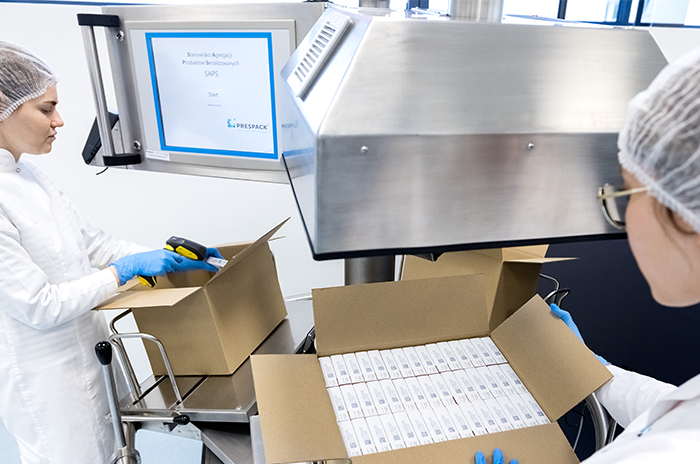
Aggregation is a process closely tied to serialization. It involves linking individual pharmaceutical product units with larger collective packaging, such as cartons or pallets. Thanks to aggregation, it is possible to track entire batches of products at various levels, from single packages to larger collective units, without the need to scan every element individually at each stage of the supply chain. This process complements serialization, enabling faster and more efficient logistics management.
Additionally, aggregation facilitates quality control, allowing for the immediate tracing of an entire batch of products if any irregularities or suspicions of falsification are detected. This not only improves operational efficiency but also enhances product safety in the pharmaceutical market.
An increasing number of countries are introducing a requirement for medicinal product aggregation. Such solutions have already been implemented by Turkey, Egypt, and India. Since 2020, aggregation has also become mandatory in the Commonwealth of Independent States (CIS) and Pakistan. In subsequent years, Japan, Brazil, South Africa, and in 2023 also the USA joined these countries. A lack of product aggregation is equivalent to an export ban to the listed countries.
Challenges associated with serialization and aggregation for pharmaceutical companies
Serialization and aggregation are mandatory in certain countries, and performing these processes is essential to deliver medicinal products there. For the pharmaceutical industry, meeting these standards involves numerous challenges that can significantly impact business operations.
The serialization process requires purchasing machinery, training staff to operate and maintain them, and ensuring employees possess adequate knowledge of the process.
Managing massive amounts of serialization-related data, including serial numbers for global supply chains, requires advanced IT infrastructure. This forces rapid evolution in IT systems, which must cope with generating, storing, securing, and transmitting this information.
All these aspects make serialization and aggregation costly—requiring major investments in equipment and software, as well as training and system updates, which further drives up operating costs.
Benefits of outsourcing serialization and aggregation
Outsourcing serialization and aggregation processes in the pharmaceutical industry is becoming an increasingly attractive option for companies wanting to effectively handle the challenges of growing regulatory and technological requirements. External companies specializing in these services offer access to modern technologies and expert teams, allowing pharmaceutical enterprises to focus on their core business areas instead of investing in costly production lines and advanced IT systems. Furthermore, outsourcing enables companies to optimize costs by eliminating the need to expand internal resources, which is especially vital for smaller entities that might struggle with implementing new solutions independently. External suppliers also offer greater flexibility and scalability, allowing processes to be quickly adapted to changing regulations and market demands.
What benefits can outsourcing serialization and aggregation services bring?
- Cost optimization: outsourcing reduces expenses associated with infrastructure, hiring, and maintaining specialized personnel and packaging equipment. An external company bears these costs, contributing to improved financial efficiency for the pharmaceutical enterprise.
- Focus on core business: by handing packaging processes over to specialists, pharmaceutical companies can concentrate on their core activities, such as research and development of new products or expansion into new markets. This enables greater innovation and better business results.
- Regulatory compliance: an external firm specializing in contract packaging possesses knowledge and experience in pharmaceutical regulations. This means products will be manufactured in accordance with strict standards, reducing the risk of non-compliance.
- Scalability: outsourcing enables a flexible response to changing market needs. An external company can adjust its services to fluctuations in demand, avoiding the excessive cost of internal infrastructure.
- Professionalism and know-how: specialists from an external firm possess knowledge of the latest trends and best practices in pharmaceutical packaging. This makes it possible to introduce innovations into packaging processes, yielding a competitive edge.
Summary
The growing importance of serialization and aggregation in the pharmaceutical industry forces companies to adapt their operations to current regulations. These processes are critical for ensuring product safety and supply chain control, but implementing them entails high costs and technological complexity. Therefore, many companies choose outsourcing, which provides access to modern technologies and specialized knowledge while eliminating the need for investments in equipment, software, and training. Support from specialized suppliers, such as Prespack, allows companies to focus on their primary operations, increasing their innovation and market competitiveness. Prespack can further optimize processes by offering comprehensive support and know-how in serialization and aggregation.
Let’s talk about how we can grow your business together.
Read also...
See more posts
Late-stage customization

Contract packaging for dietary supplement manufacturers