Medicines serialization
Medicines serialization is today one of the key safety elements in the pharmaceutical industry. Check out how 2D Data Matrix codes and ATD tamper-evident features work, and how they protect patients from falsified medicinal products.
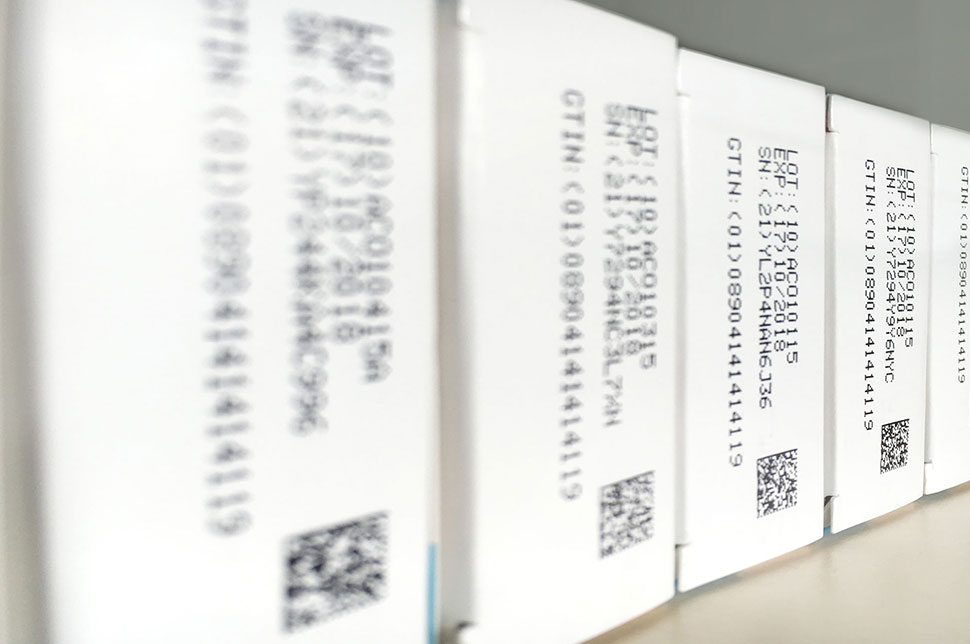
February 9, 2019, marks a vital date for the pharmaceutical industry. Since that day, the obligation to place a unique identifier and a tamper-evident seal on the packaging of medicinal products has entered into force.
This obligation is imposed by Commission Delegated Regulation (EU) 2016/161 of October 2, 2015, supplementing Directive 2001/83/EC of the European Parliament and of the Council by laying down detailed rules for the safety features appearing on the packaging of medicinal products for human use. The introduced innovations, combined with database systems gathering information on medicinal products from across the European Union, are designed to counteract the presence of falsified medicinal products in the legal distribution chain.
What is medicines serialization?
One of the goals of the Falsified Medicines Directive is to create a European database system through which pharmacies, wholesalers, and other entities supplying medicines to patients verify the authenticity of medicinal products before dispensing them. Original prescription drugs are serialized and entered into the European EU HUB system, where all serialized products are stored. Before dispensing a drug to a patient, the pharmacist scans the code, verifies it, and deactivates it in the system using a special 2D Data Matrix code scanner. If the verification is positive, the pharmacist can dispense the medicine to the patient. However, if the code verification is negative, the system notifies them via an alert that the medicine may have been falsified. The pharmacist cannot dispense it and initiates a procedure to re-verify the product’s origin.
What does the 2D Data Matrix Code on medicines contain?
The code contains information regarding the batch number of the medicinal product, the serial number of the specific package, the product code (GTIN), and the expiration date. It is therefore a unique code for each product package that cannot be duplicated.
What to pay attention to when buying medicines?
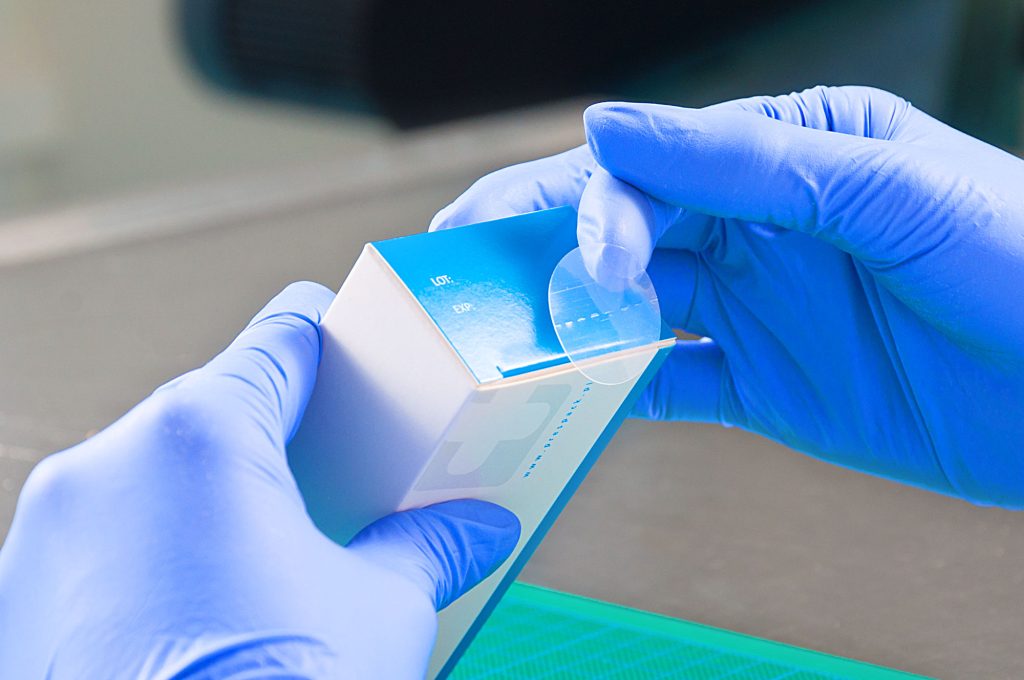
The code assigned during product serialization is not the only security feature. Another element we should pay attention to when buying medicines is a small sealing label, abbreviated as ATD (Anti-Tampering Device). It is an additional safeguard against tampering with the medicine’s packaging, preventing unauthorized opening and potential content substitution. Such a seal ensures the safety of the medicine because breaking it reveals that the packaging has already been opened or the label torn off, and even if reapplied, visible evidence shows the packaging has been compromised. It is worth emphasizing that this applies exclusively to prescription drugs. It does not concern dietary supplements and over-the-counter (OTC) medications.
Who is responsible for securing medicines?
ATD sealing labels and assigning the identifier in the form of a 2D Data Matrix code are the responsibility of drug manufacturers. Thanks to this, we achieve full identification of the medicinal product throughout the entire distribution chain, ranging from the manufacturer to points of sale—medical wholesalers or pharmacies. If, on the other hand, we purchase medicines from suspicious sources, we have no certainty regarding whether it is an original product and what its composition is.
In the area of serialization, Prespack provides software managing the manufacturing process and communicating data to the central EU HUB serialization data repository. This software was created with Marketing Authorization Holders (MAHs) in mind, as well as Parallel Importers (PI MAHs). Prespack has successfully tested and implemented all serialization procedures and successfully provides this service to all its clients.
If you need more information about the serialization process at Prespack, feel free to contact us. We will answer all your questions.
Read also...
See more posts
Late-stage customization
Serialization and aggregation in the pharmaceutical industry