Late-stage customization
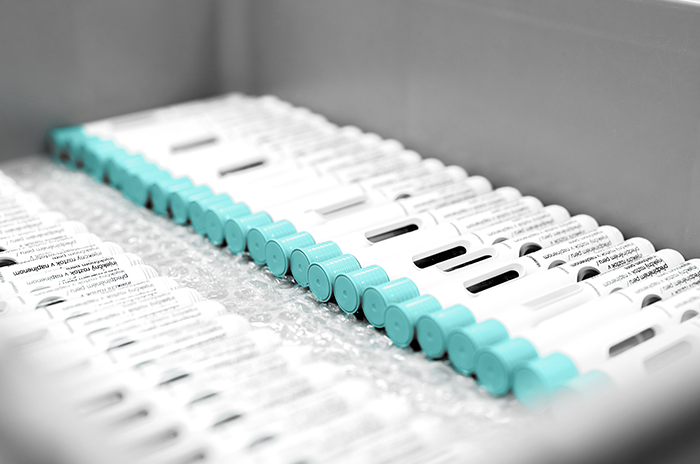
In recent years, the pharmaceutical industry has had to meet growing regulatory requirements and dynamically changing market expectations. Personalization and flexibility in this sector are also becoming crucial in the context of patient safety. Counterfeit medicines have become a problem, posing a serious risk to patients and consumers. In the European Union, regulations have been implemented aiming to ensure patient and consumer safety by preventing the illegal introduction of falsified medicines into the supply chain.
Prescription medicines serialization became mandatory in the EU on February 9, 2019, requiring a system to track and trace medicines throughout the supply chain. The next step is aggregation, which links serialized unit packages of medicinal products packed in master cartons with a higher level of secondary packaging, and subsequently with the pallet level, assigning them a unique serial number.
Such solutions have already been implemented by countries such as Turkey, Egypt, and India. Since 2020, aggregation has also become mandatory in the Commonwealth of Independent States (CIS) and Pakistan. In subsequent years, Japan, Brazil, South Africa, and the USA also joined these nations. A lack of product aggregation is equivalent to an export ban to the listed countries. In response to these challenges, the concept of late-stage customization – the personalization of pharmaceutical products at a late production stage—is gaining increasing importance.
Definition and essence of late-stage customization
Late-stage customization is a process enabling the adjustment of packaging, labels, and other elements of a pharmaceutical product right before its distribution. This allows manufacturers to flexibly respond to the specific requirements of individual markets while minimizing costs and the risk of losses.
In the traditional production model, each batch of medicines is prepared in advance for a specific market, requiring prior planning of packaging, labels, and leaflets in the appropriate language. In contrast, under the late-stage customization model, these elements can be adjusted at a later stage, increasing efficiency and avoiding issues related to unpredictable demand.
In the European Union, pharmaceutical products must meet various packaging and labeling requirements depending on the destination country. Furthermore, introduced regulations on drug serialization and aggregation require strict tracking throughout the supply chain. In the traditional approach, any change in labeling meant a necessity to halt production, leading to downtime and increased costs. Late-stage customization allows for the rapid and flexible adaptation of medicines to various markets without interrupting production processes at earlier stages.
Modern technologies and the growing popularity of contract packaging outsourcing play a key role in implementing this model. They enable lightning-fast packaging adjustments even for very small drug batches, which is extremely important in a dynamically changing market. As a result, pharmaceutical companies can not only optimize their logistics processes but also bring products to market faster and better adapt to changing regulations and patient needs.
Prespack’s services include packaging, repacking, serialization and aggregation, labeling, and the preparation of medical kits. Late-stage customization is an essential part of our operations and is particularly important in the turbulent market situation quite commonly observed today, where market demand for specific products changes very dynamically. Thus, bright stock (the process of manufacturing and storing pharmaceutical products supplied by the manufacturer in unmarked unit packaging that are not yet designated for a specific market) at Prespack is becoming a highly desired solution for companies seeking flexible answers. Moreover, the necessity to meet regulations related to serialization is a significant driver for the development of the concept of late-stage customization.
At Prespack, we also provide services for pharmaceutical manufacturers involving the assembly of medical kits for various EU markets from semi-finished products imported to us. This is a significant advantage for these companies because the late-stage customization process takes place with us. How does it work? The company allocates quantities, such as syringes or autoinjectors, to the final product packaging based on its specific demand for individual European markets. We provide the necessary components and packaging materials and create the ready-to-use product for the client. We also perform this service for products requiring storage conditions between 2 and 8 degrees Celsius (cold chain). This is made possible by our cold room, which allows us to store up to 300 pallets.

Benefits of late-stage customization
Implementing a late-stage customization strategy in the pharmaceutical industry brings numerous benefits, impacting supply chain optimization, cost reduction, and ensuring compliant drug manufacturing.
One of the key strengths of this approach is increased production and distribution flexibility. Thanks to the ability to adjust packaging and labels right before distribution, manufacturers can respond more quickly to market and regulatory changes, avoiding the need to store large quantities of finished products tailored to specific countries.
If serialization and late personalization take place directly before packaging, significant savings in warehousing and logistics costs can be achieved, as efforts related to purchasing, storage, and logistics management are restricted.
Late-stage customization increases supply chain flexibility, enabling products to be tailored to the specific requirements of local markets in a short time frame without maintaining large inventories of packaging and labels.
Additionally, creating generic packaging before its final customization eliminates the need to produce smaller batches for individual markets, allowing for the manufacturing of larger product series and thus lowering the unit cost of the product.
The benefits of this model are visible not only to manufacturers but also to patients. Faster adaptation of medicines to local market requirements means better product availability and more efficient distribution. Through late-stage customization, pharmaceutical companies can streamline operational processes while better meeting patient needs and dynamically reacting to evolving market demands.
Challenges and limitations
Despite numerous benefits, late-stage customization also involves challenges that can present barriers to its implementation. A key aspect is ensuring adequate technological infrastructure, including modern digital printing systems, the acquisition of serialization and aggregation machinery, as well as the validation of connections between serialization systems and contractor systems, maintaining an active system environment, system backups, and retaining trained personnel. Logistics also become more complex—managing small product batches requires precise coordination of orders and inventory maintenance for all components, managing changing packaging material artwork, and storing and transporting personalized medicines must meet specific standards. Therefore, many manufacturers choose to cooperate with companies specializing in contract packaging that possess the appropriate technological background and experience in executing this process.
Summary
Late-stage customization is a concept that significantly impacts how drugs are produced and distributed, offering manufacturers greater flexibility, cost reduction, and regulatory compliance.
Due to requirements concerning drug serialization and aggregation, implementing late-stage customization is becoming not just an option, but often a necessity for pharmaceutical companies wishing to compete in international markets.
The future of the pharmaceutical industry is heading toward increasing personalization and automation of production processes. Therefore, companies that decide to implement a late customization strategy today can gain a competitive edge and better respond to the needs of a dynamically changing market. It is therefore worth analyzing the benefits brought by contract packaging outsourcing and choosing a trusted partner to cooperate with.
Read also...
See more posts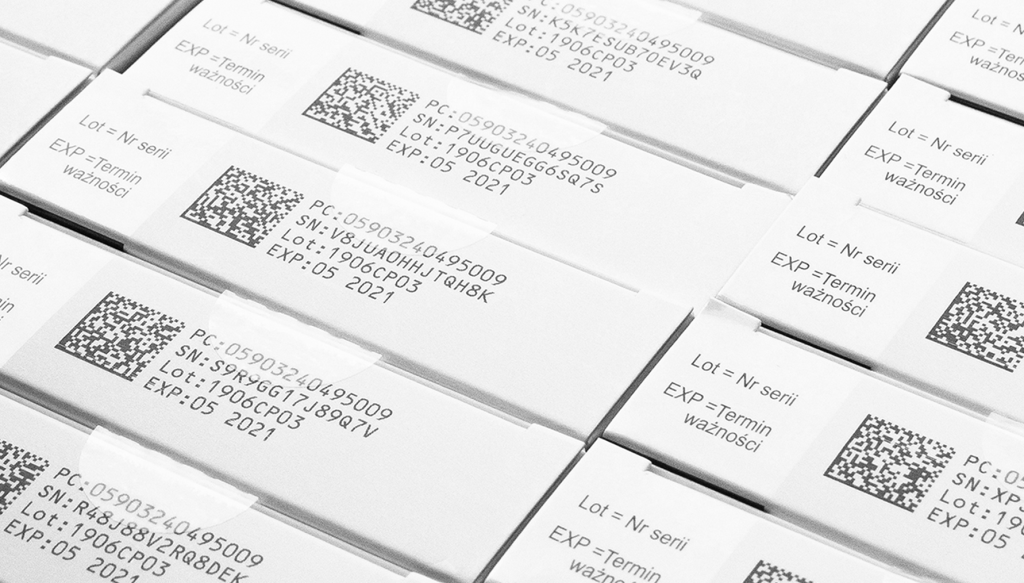
Serialization and aggregation in the pharmaceutical industry

Contract packaging for dietary supplement manufacturers